



The Refillery
Behavior-First Strategy That Turns Refill Into Ritual
- Challenge
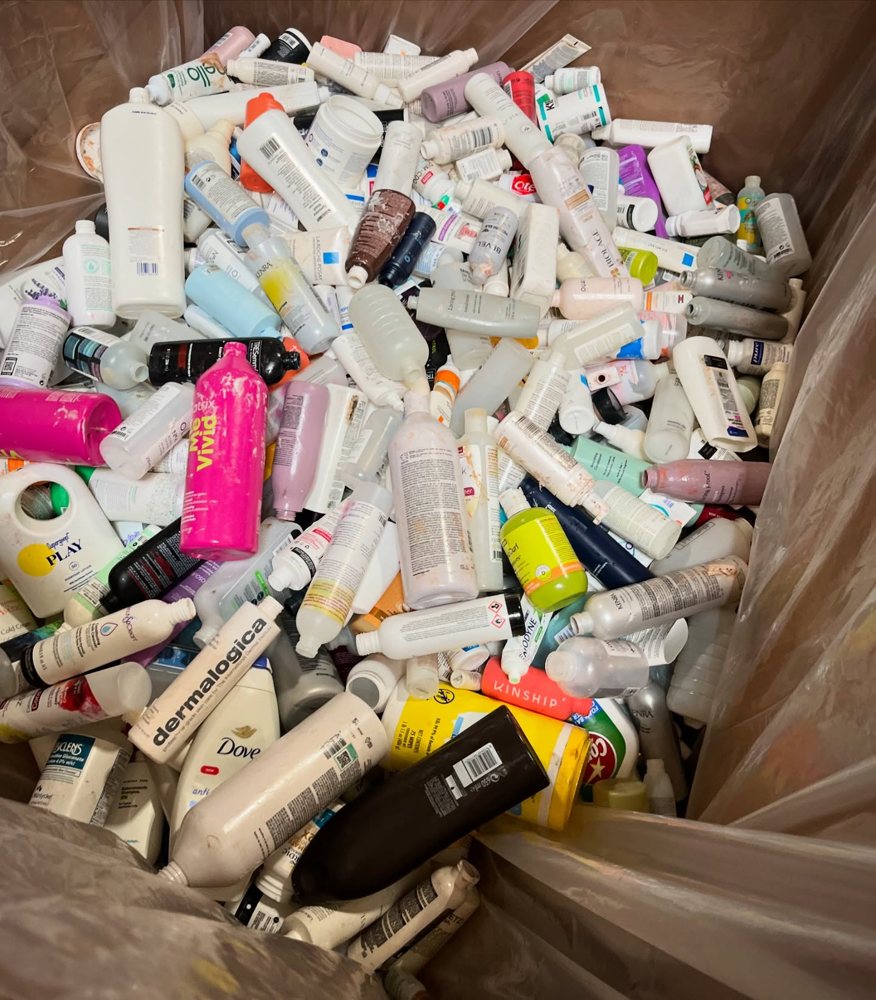
- Beauty produces over 120 billion units of packaging a year, and most of it is too small or too mixed in material to recycle. Curbside systems confuse consumers, and the programs retailers run to address it go unpromoted, digitally and physically. Distinctive packaging is core to how beauty brands stand out in a sea of products. So the real question became: how do you make reuse the easy choice without asking brands to redesign?
- Approach
-
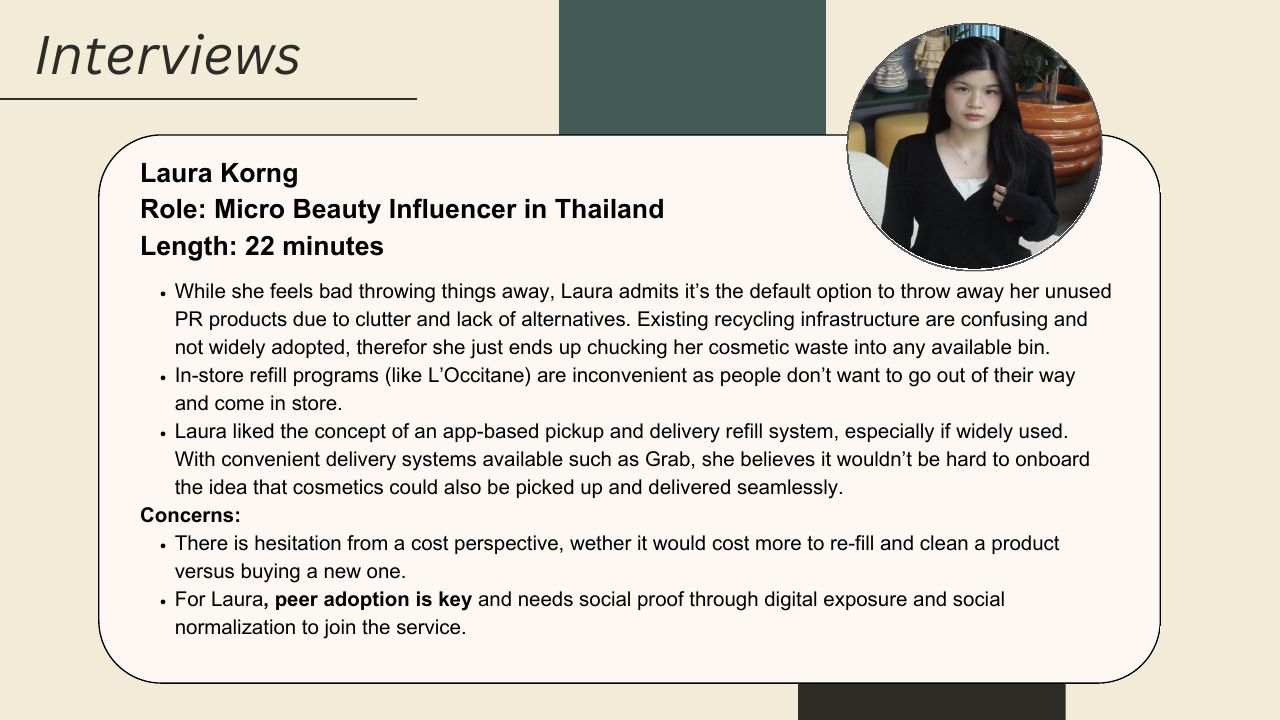
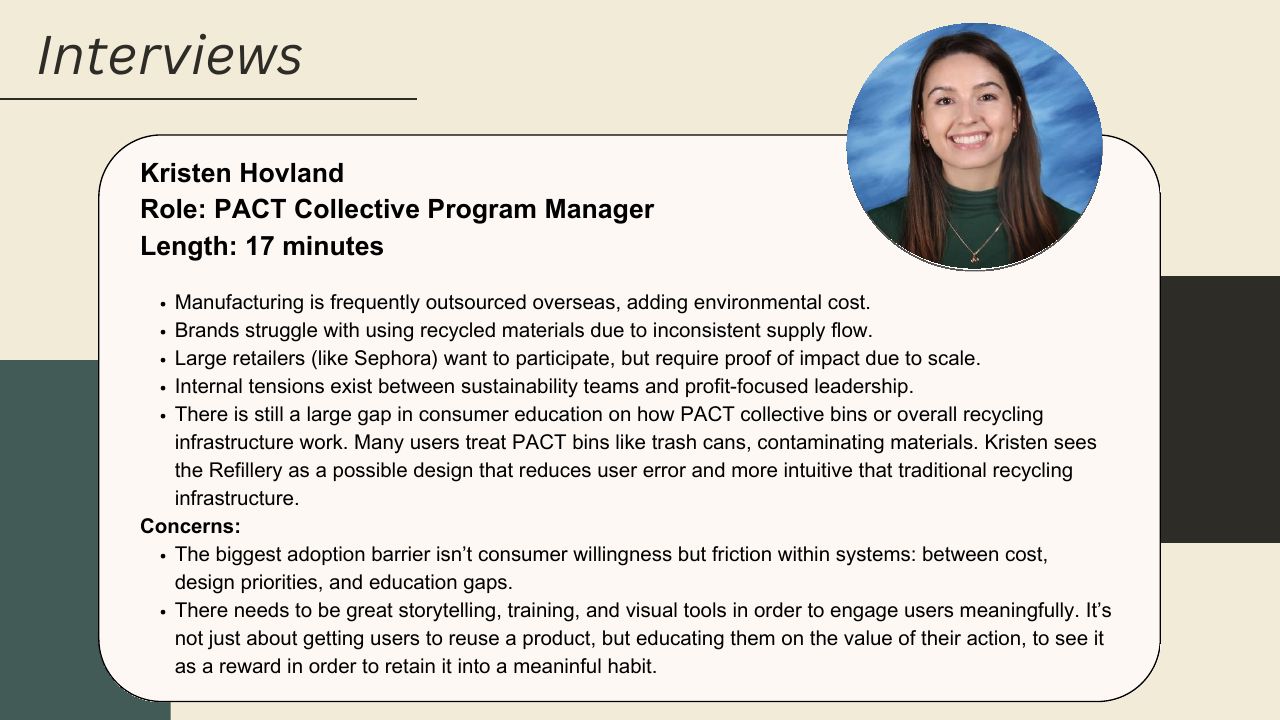
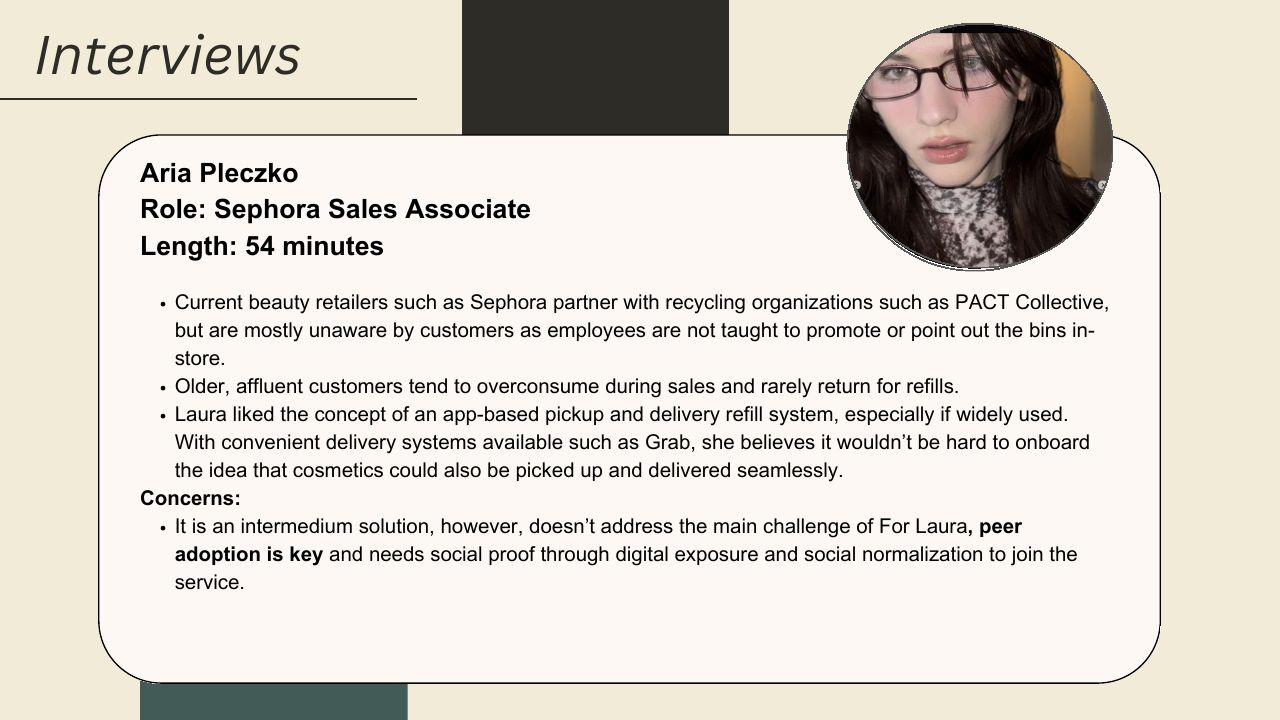
I interviewed three people across the system: a micro beauty influencer, a PACT Collective program manager, and a Sephora sales associate. I paired those conversations with a digital audit of beauty retailer websites. Three insights shaped the direction:
- Convenience beats conscience. Consumers feel guilty tossing empties but do it anyway, because in-store drop-offs ask them to go out of their way.
- The system is the barrier. Recycling programs exist, but staff aren't trained to mention them and retailer sites bury them in footers. Users who do find the bins often contaminate them.
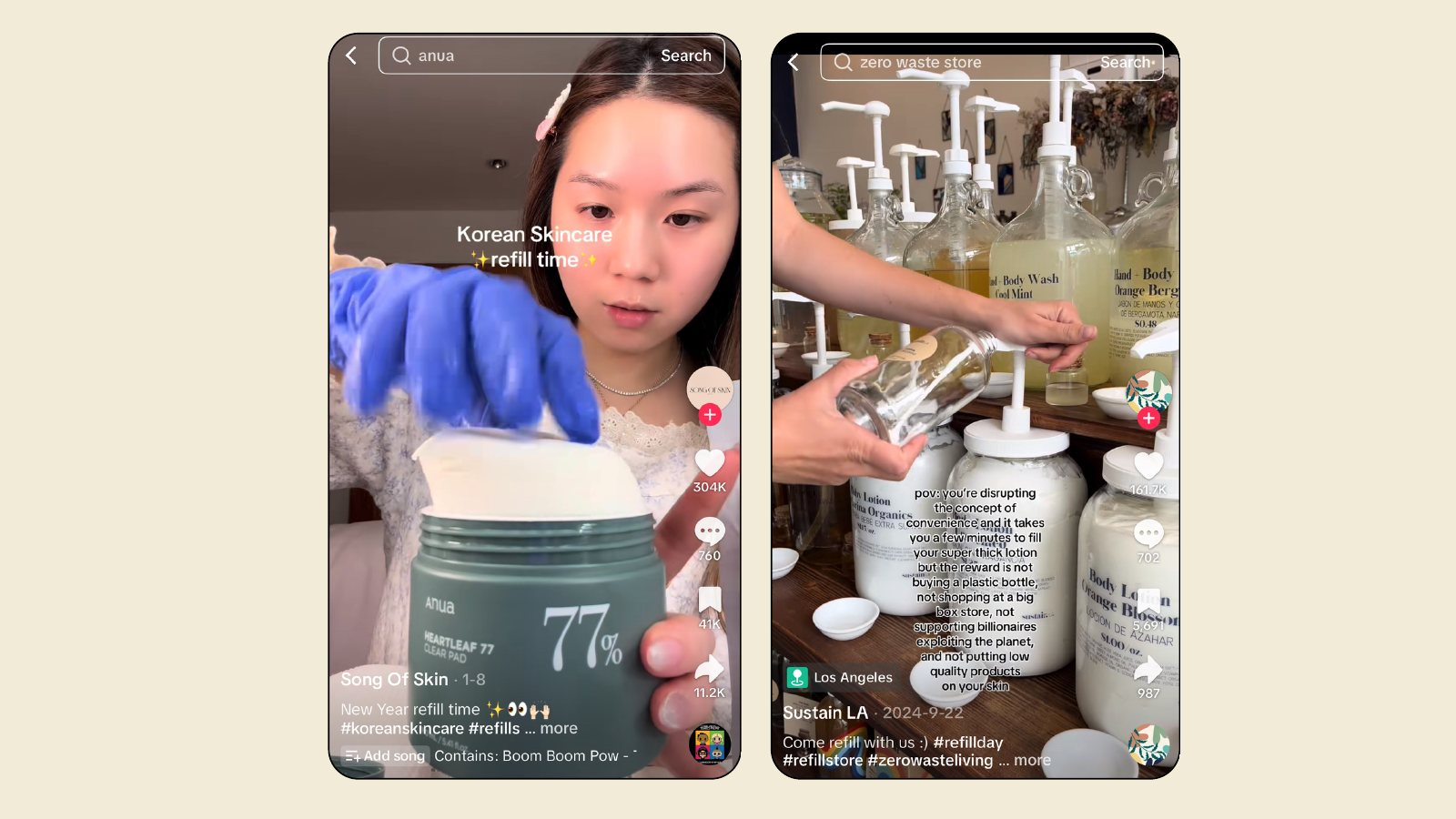
- Adoption is social. People join when their peers do. Refill culture was already growing on TikTok, which made it the natural place to normalize the behavior.
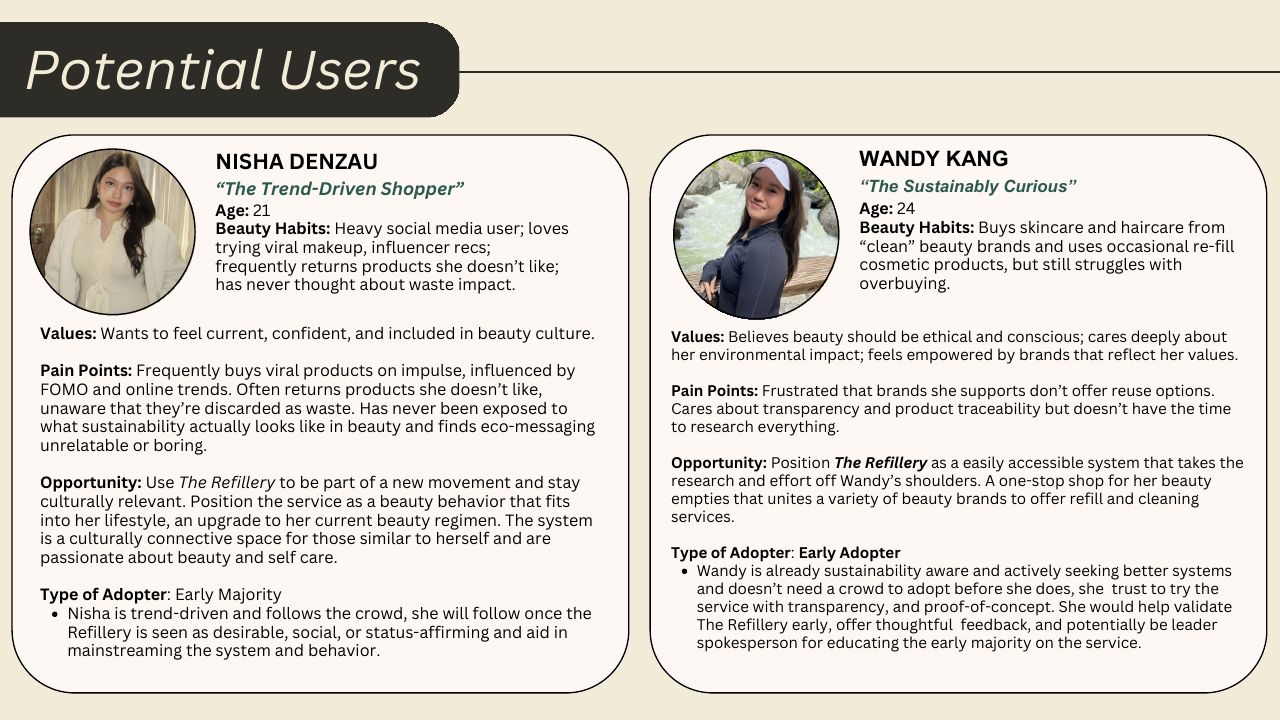
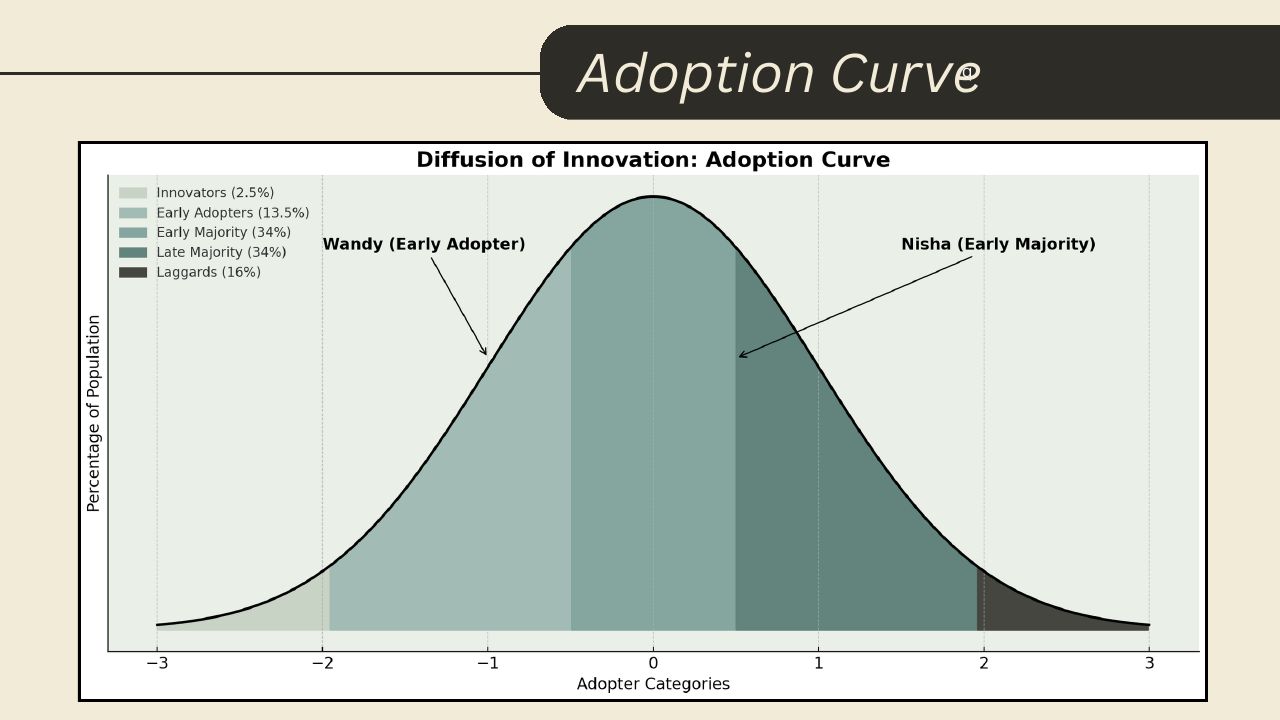
From there, I built two personas, a sustainably curious early adopter and a trend-driven early majority shopper, and mapped them onto the diffusion of innovation curve to plan who The Refillery would reach first and how.
- Solution
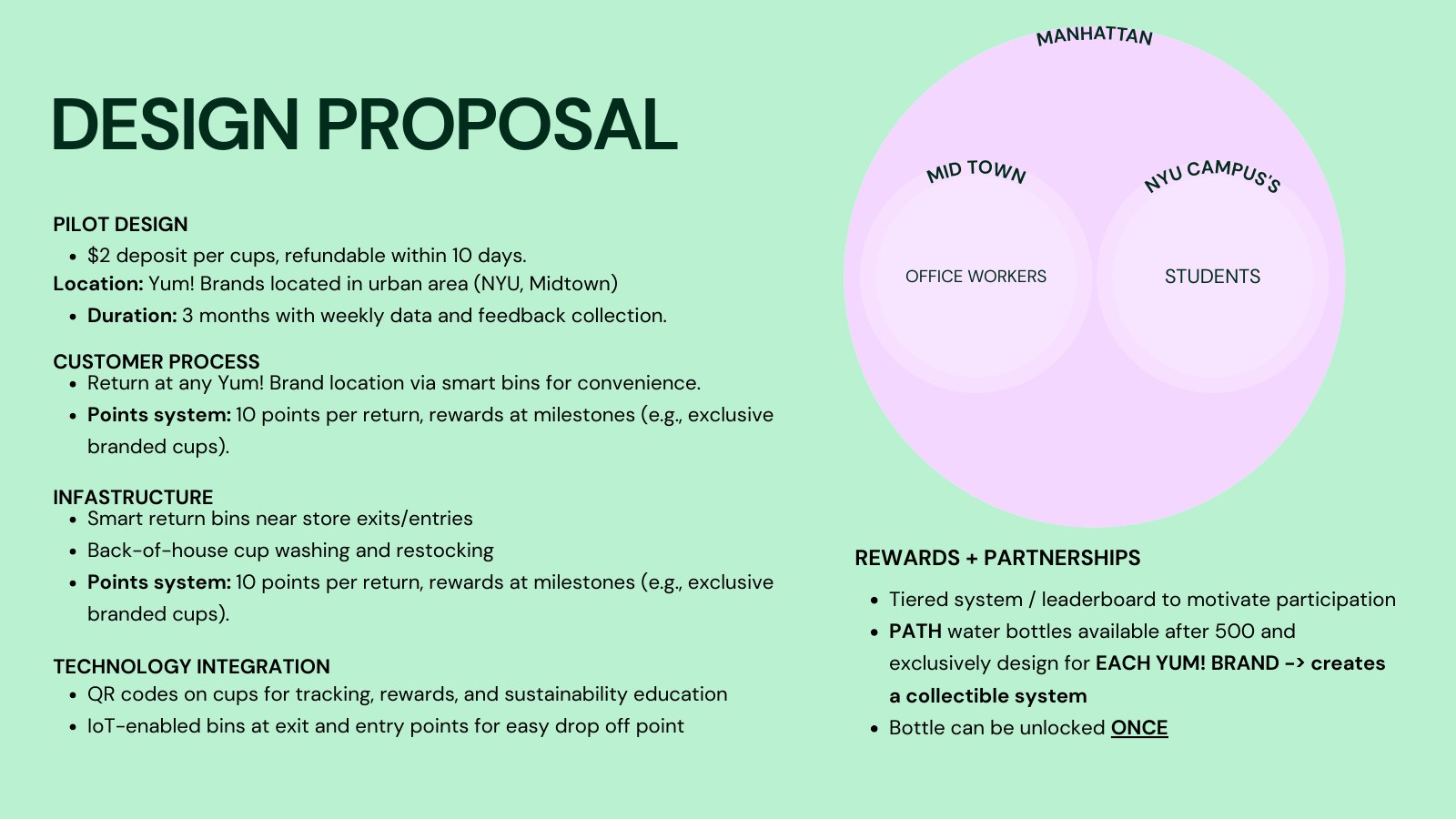
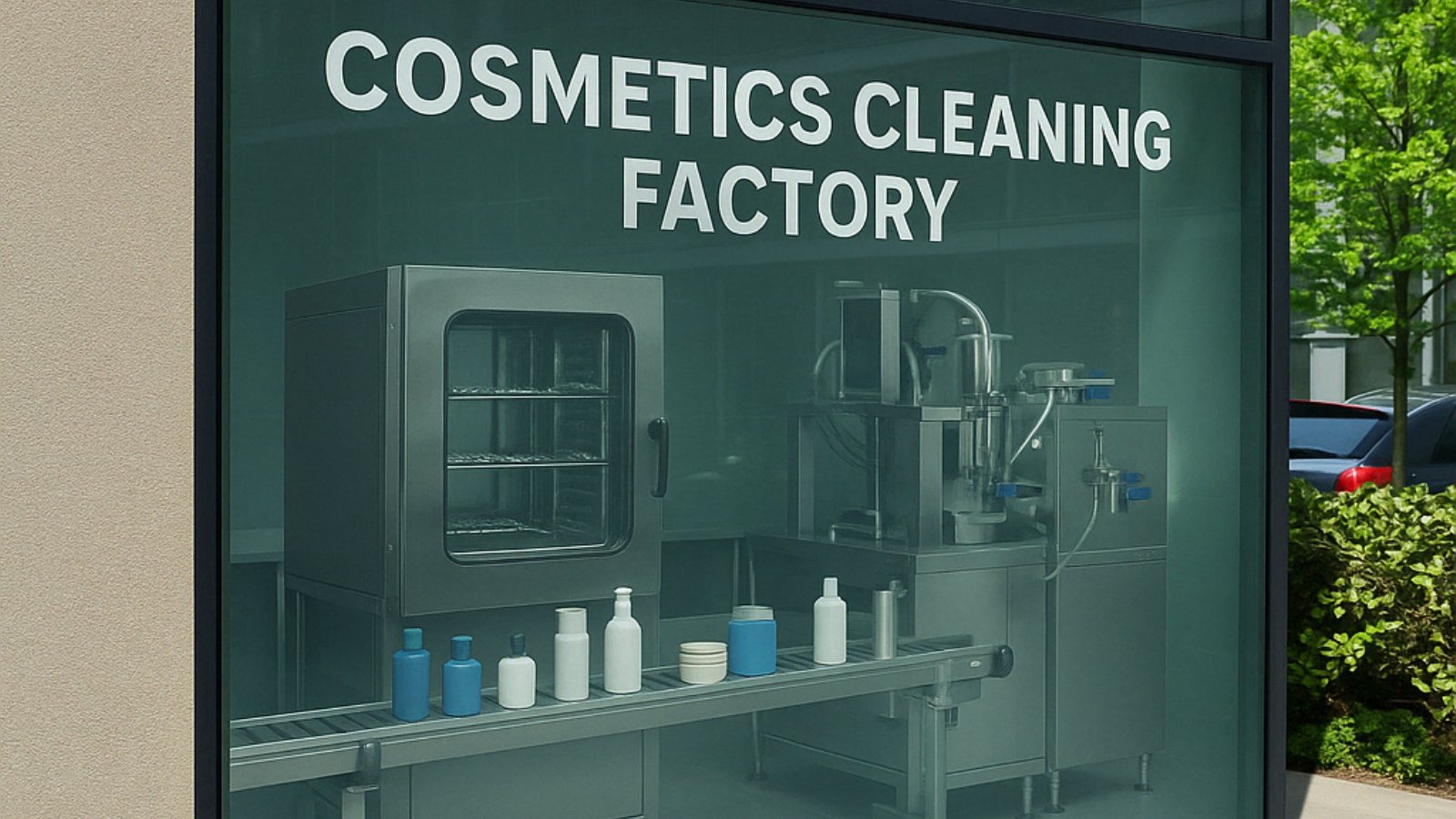
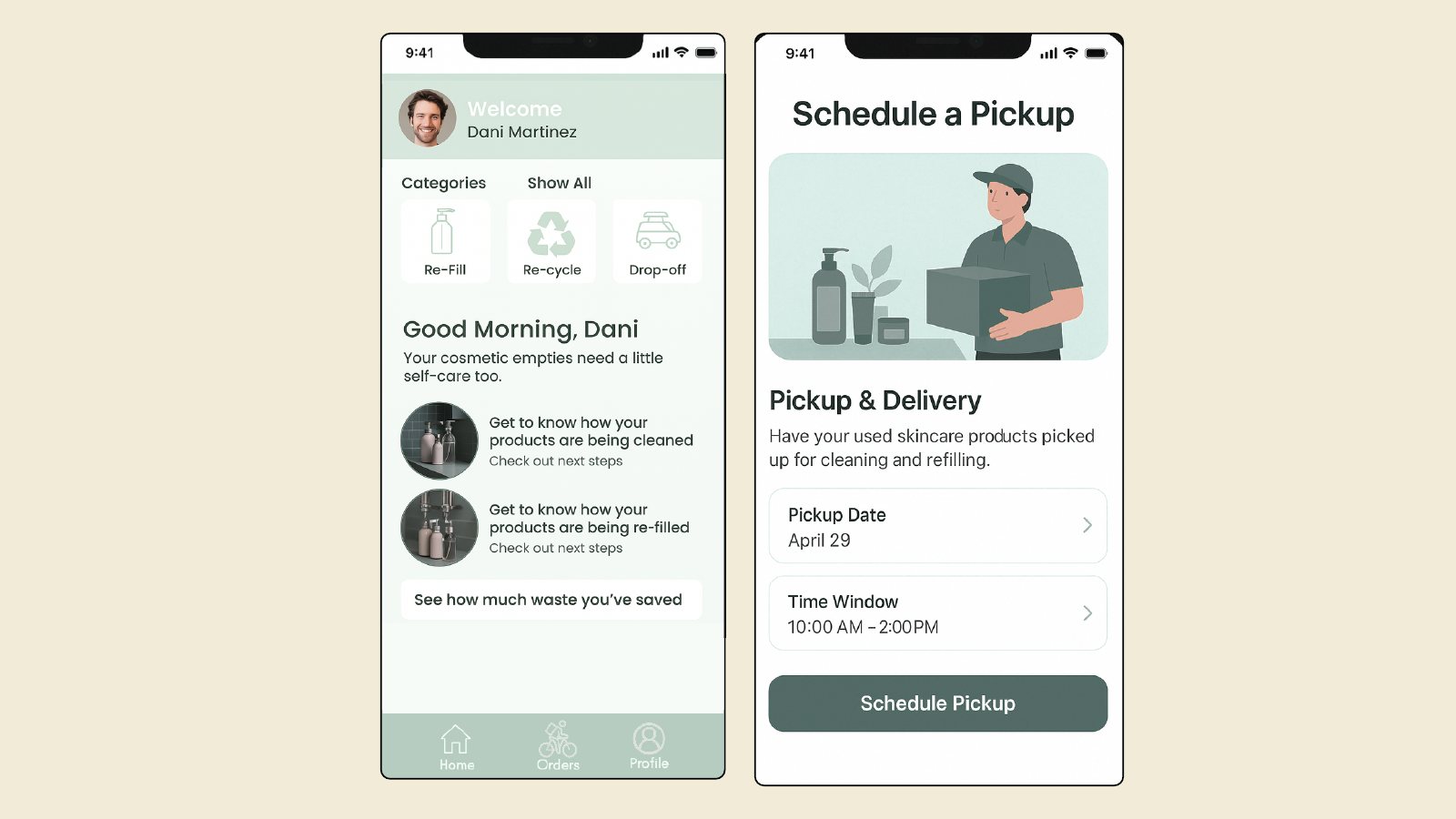
- The Refillery is a return-clean-refill system that works with the packaging beauty brands already make. Users drop off empties at a Refillery location or schedule a pickup through the app. On-site machinery cleans and refills each container before it heads back to its owner.
-
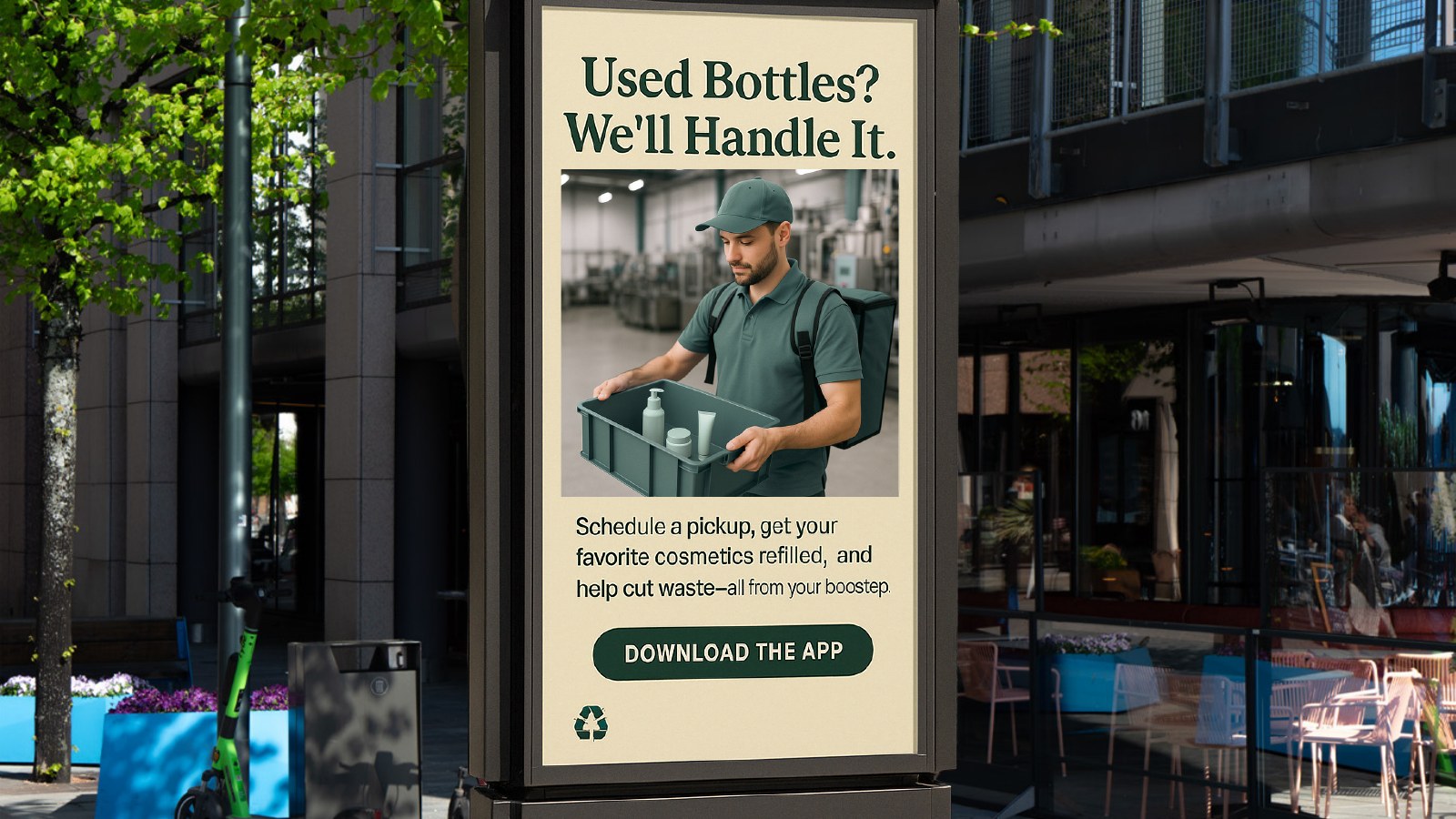
An app that removes the effort. Pickup and delivery bring reuse to the doorstep, so convenience works for reuse instead of against it. A tracking dashboard turns every return into visible progress (“You’ve saved 12 bottles”), and short videos of the cleaning process answer hygiene concerns up front.
A rollout that makes refill social. Early adopters lead, and creators carry the behavior to the mainstream. Partner creators get free trials to feature refilled products in GRWMs and before-and-afters, building on refill content that’s already trending on TikTok.
- Outcome
-
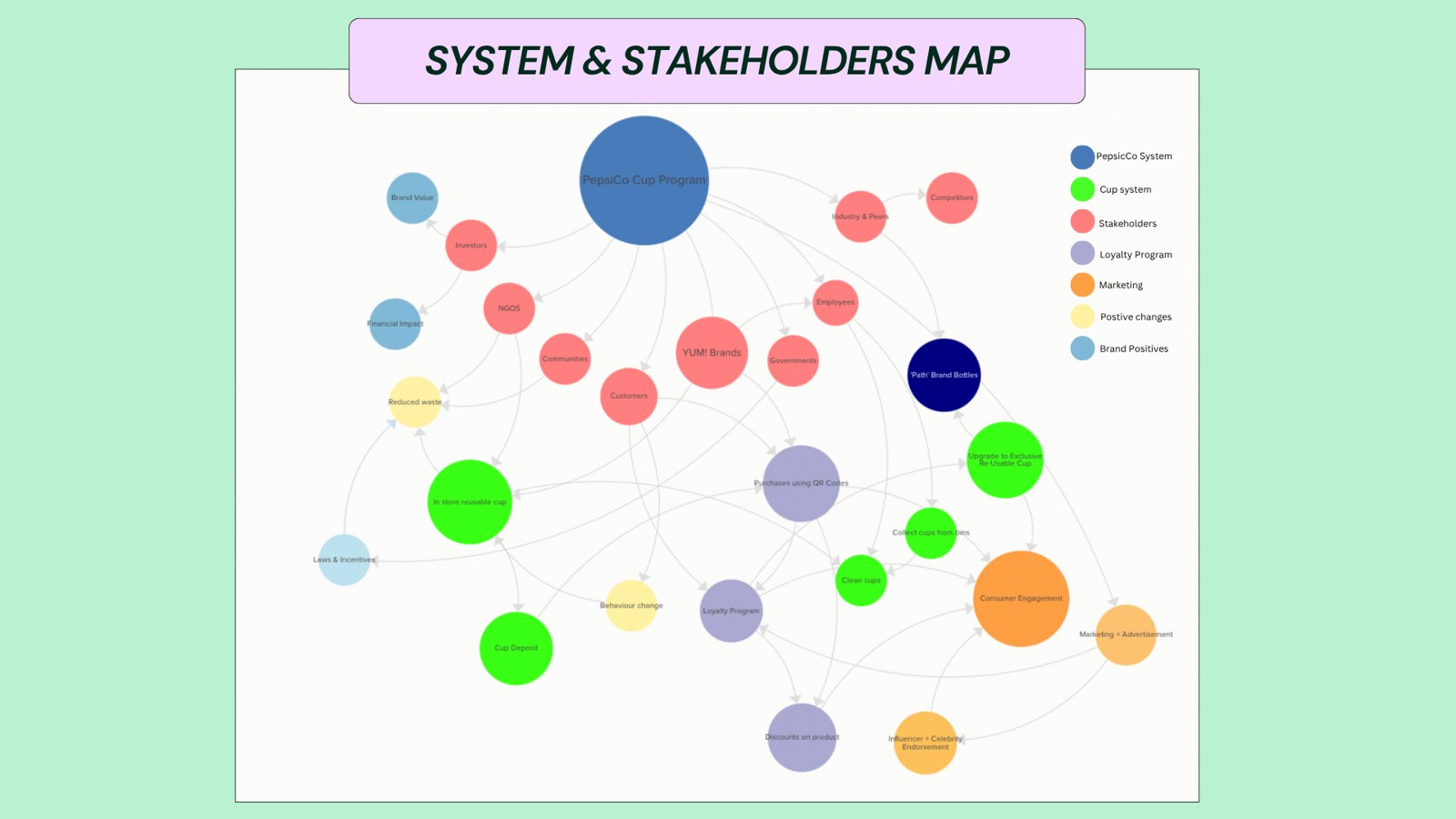
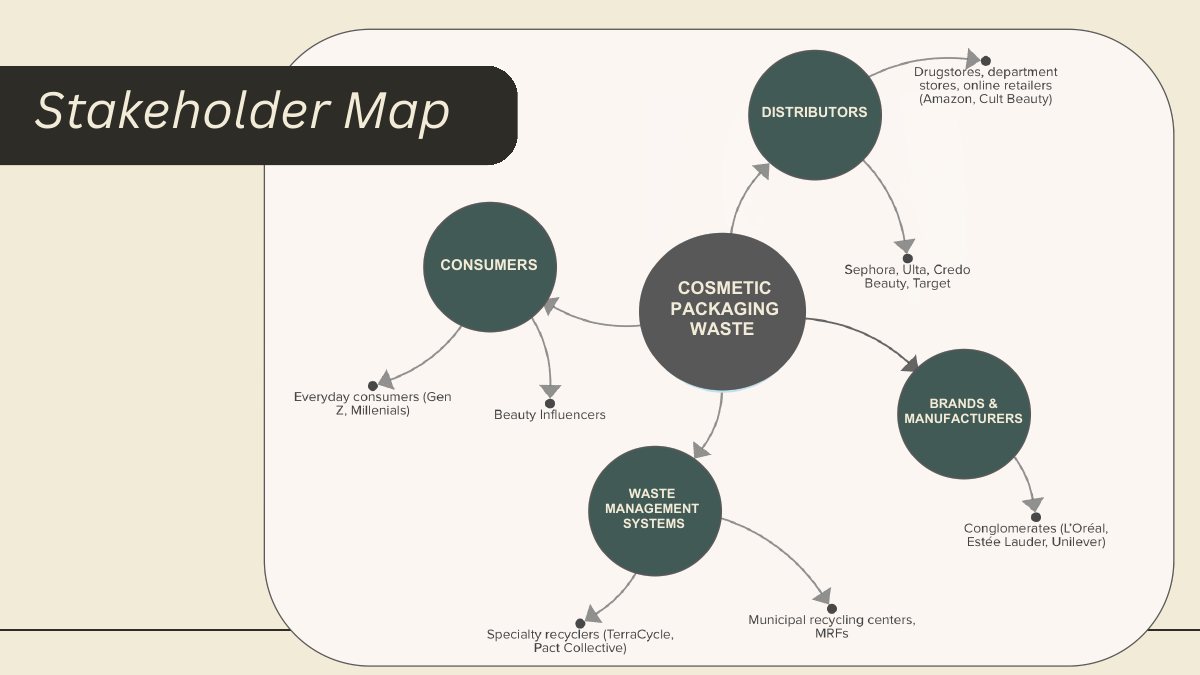
The final deliverable was a full service concept: a stakeholder map, user personas, an adoption strategy grounded in diffusion of innovation, app screens, and a launch campaign spanning TikTok and out-of-home.
The concept resonated across the system. The PACT Collective program manager saw it as more intuitive than current recycling infrastructure and likely to reduce user error, and the influencer I interviewed said app-based pickup would feel as natural as ordering on Grab.
What I’d test next: whether refilling can match or beat the price of buying new, the biggest hesitation in my interviews, and how much proof of impact a retail partner like Sephora would need before signing on.
This project taught me that sustainability is a communication problem as much as a design one.